Wednesday, October 10, 2012

A Testimonial

I was first recommended to Jamie and Canine Behavior Training/Seize the Leash when, after four years, my fourteen year old dog, Guiness, began viciously attacking my four year old dog, Bailey. With three daughters in my home, I was frightened to leave the dogs unsupervised or around my girls. I reached out for help and the comments of, "Get rid of one of the dogs." fell on deaf ears.

After coming home, one evening, to a blood splattered porch and wall, Bailey's neck punctured and bleeding, I sunk to my knees and cried. My sister reminded me of the dog trainer we'd briefly met, Jamie, that may be able to help. Grief stricken and feeling helpless, I decided to call.
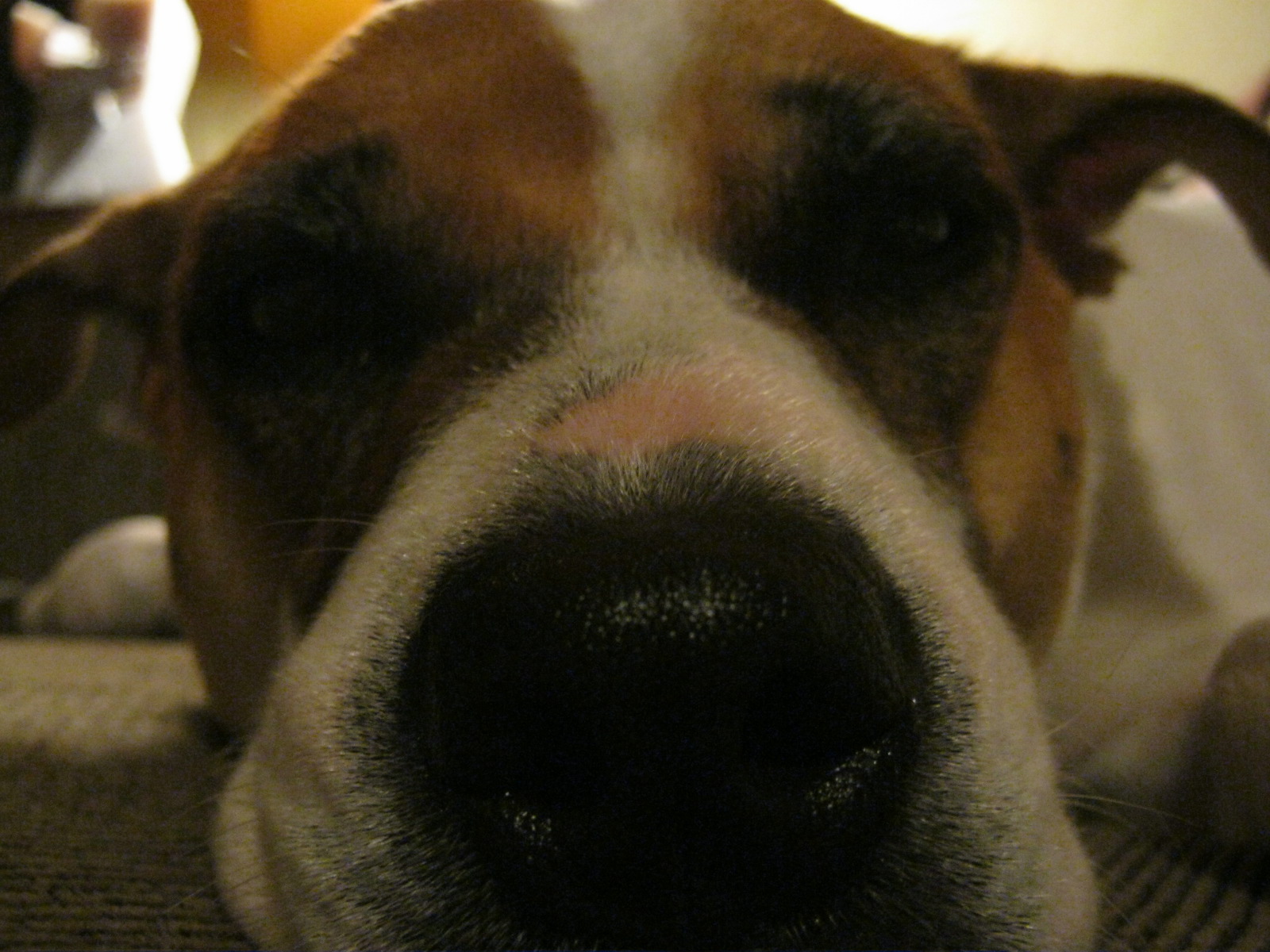
To my relief, Jamie came the very next day. She stayed for a one hour, free, in-home evaluation. Although the full hour wasn't necessary. Jamie swiftly and expertly identified the problems within the first 20 minutes. First, Jamie told me Guiness was in pain, and recommended a vet visit. I didn't know it was possible to feel worse, but now I did. I felt like a horrible dog owner. How had I not noticed? After having Guiness for 13 years, you would think I would! She still ran with me, chased rabbits on our off leash runs in the desert, dug holes and jumped on the bed. Pain?! How? Why?

Jamie explained dogs do not show pain like humans. Small flashes were apparent to her expertly trained eye. In addition, to my surprise, Jamie mentioned my 13 year old dog, Lucky, and 14 year old dog Guiness had an incredible bond. I knew this, of course, but how could someone that had been in my home for less than 30 minutes see? She advised that Bailey simply didn't know her place, and identified Bailey as the one in need of training. To be honest, I did not agree or think that training classes for the dog BEING attacked could help. Plus on a limited budget, smack dab in middle of the recession, every penny counts. I found myself thinking, "Is she just trying to make money because of the free visit?" But, knowing I was out of other options (because who gets rid of their 14 year old dog) I reluctantly agreed.

A vet visit and xray proved Jamie spot on. Guiness had three slipped vertebrae in her spine that were fusing together. At her age, surgery was not an option. My matriarch of the family was given medication to ease the pain. I was told she would have to be on it for life. I would do anything to make her remaining time with me more comfortable.

We started training Bailey, or more accurately, Jamie started training me. I was fascinated when I slowly arrived at the conclusion that it is the human receiving the training, not the dog. Several times I had to put my ego away and learn to listen and accept responsibility for what I was doing incorrectly without excuses or justification. So frequently I would whine, frustrated, "Bailey just isn't getting it." Jamie would calmly walk over smiling, and seamlessly have Bailey perform the task we were given. My mouth dropped open. I was then receptive to her showing me once again how to accomplish the "trick" we were learning.

My whole life I've aimed to learn to have more patience. Never, in my wildest dreams, did I think a dog trainer and a dog would teach it to me. I was also keen to listen and learn because Jamie's method of training is outdoors and based on positive reinforcement. No choke collars, no yelling, no shock collars. Simply, ask the dog for a behavior and reward when it is given. The dog begins wanting to do the behavior, this also builds trust. Wow, how dumb do I feel. But as I think about it, if you didn't know Spanish and visited Mexico how would you feel if the locals hit you with a newspaper or yelled in your face shocking you with electricity, every time you pronounced a word incorrectly? You would stop trying and shy away. I notice when I try to speak Spanish, I am encouraged and smiled at for the effort. This should translate to dogs. How would they know what we are trying to say? Encouragement. But I digress...

To my utter amazement almost immediately, the dog fights ceased. There was one more fight after training started, and that was thankfully, the end of it. Jamie made another house visit, at no charge, once Guiness was settled in, and taught me ace bandage wraps and gentle touches and massages that would soothe Guiness' pain. Jamie's kindness and love for dogs is sure and true.

My story could end here, on a happy note. Tragically, it does not.

Bailey successfully completed her 6 weeks of training! I could not have been more pleased with myself, and her. I thought "Sit, Stay, Down" was what we were to learn. I didn't think not pulling on the leash, no longer randomly barking incessantly, sitting until I give the command to release (even when I jog or run around her) and not eating food when I accidentally drop it on the ground, were in the syllabus.

I didn't think genuine happiness for Guiness, Lucky, Bailey and my family, was part of the entire picture. Bailey and I bonded. Her energy and spark were contagious. I was laughing again, the whole house was. She was so willing to "work" and began offering behaviors, I craved to learn how to teach her more. I began saving my pennies realizing Jamie's fee is not only fair, but on the too generous side. I spoke with proud Jamie and she agreed, rally is the next step for Bailey and I. Rally is a class where the true fun begins. Superdog jumping over poles, snake-like weaving though objects, crawling up A-Frames and proudly sitting on top like she conquered Mount Everest. We enrolled. After our first few weeks of Rally, Bailey and I were playing our newest learned game of "tug." She ripped a small piece of fabric off the toy and swallowed it. This moment in my life will be burned into my memory forever. Something so simple, so stupid, ended up killing my dog. The fabric became logged in her intestine. When my husband and I took her to our vet, Dr. McMillian, two days later because she was lethargic and wouldn't eat, he gave her a quick xray to determine what the trouble was. He came into the room with a blank stare on his face and delivered the earth shattering news. He didn't think operating could save her, about 80% of her intestine were rotted and her body was shutting down. My husband says I was jumping up and down screaming. This is lost to me. We made the horrific decision to put Bailey down in April 2012.

I called Jamie, she was devastated and cried with me. The house became like a ghost town. The energy died with Bailey. The senior dogs became just that, seniors. They stopped playing. The energy apparently left them too, Guiness began to deteriorate and not even a month later I had to make the decision to put Guiness down. She passed May 2012. Now although this was more "expected" due to her age, the wounds were still raw from my recent loss and my ability to cope with losing my long time friend, was shattered. I was shattered. Lucky stopped eating and had to be put on anti-depressant medication.

Three days into this mess I called Jamie and asked her what she thought of us getting a puppy. Jamie said normally she doesn't recommend a replacement dog so soon, but in this case she did. Looking back I believe this was the moment that Jamie crossed over from trainer and into a friend. She called all her dog loving friends and adoption clinics. We visited the humane society with my family to help find a puppy that would fit best with Lucky. After all, Lucky is the new matriarch of the family.

We didn't find a puppy. We found two - sisters. Glorious, precious, wrinkly, loveliness. Half Shar-Pei, half Labrador. One outgoing and fun, golden like the color of the sun. The other hesitant but a snuggler, jet black with wide wondering eyes. The adoption volunteer asked how I felt about this breed of dog potentially living until they were 15-17, I almost cried in relief, although I do not believe that was the response she was expecting.

Jamie made another trip to the house (I live in Vail folks, this is a drive that requires a stop for snacks) and helped me introduce the puppies to Lucky. It took a grueling month and yet another trip by Jamie, for Lucky to become accustomed to all this change. The loss of her best friend of 13 years, and new puppies crawling all over her and biting her tail as it swished back and forth. Lucky now is in love. Smitten by these two, Ava and Roo, who adore her every move. Lucky has her spark back, and so does my family.

We immediately enrolled Ava and Roo in puppy class. Yes, ridiculous as it sounds. Jamie had us brush their teeth, mess with their paws, clean their ears, open their mouths to touch their tongues, rub their fur backwards, and more random things I would have never thought of. I laughed because I knew this was unusual by normal puppy training expectations. But that is why I swear by Jamie.

All the little things are so simplistic, yet so important. Not a week after, Ava was stung by a bee and her entire mouth and neck began swelling. My eldest daughter called me panicked and I left work for an emergency trip to the vet (I'm thinking, Really more dog drama?!) We arrive and after an immediate injection to stop the swelling, the vet was searching her mouth for the stinger. Dr. McMillian was able to locate and successfully remove it because Ava held perfectly still and didn't mind her mouth being probed, a bit. Dr. McMillian said,"Have you been working with her?" To which I proudly replied, "Yes." He looked at me for a beat and said, "Thank you, that was wonderful. No squirming dogs or risk of me being bitten" and he smiled.

The puppies could sit at 8 weeks. And under Jamie's guidance and watchful eye, we gradually learned: roll over, leave it, to sit in or on anything I place in front of them, go around, jump over, wait, beg, lay down, and touch. Now, at 7 months, Roo can jump through a hoola hoop!

My story does have a happy ending. My incredibly painful loss, subsequent devastation, and broken heart has lead me to a new friend, and two playful and wonderful new additions to my family, the ever spoiled Ava and Roo.

P.S. I have, as of this very day, been invited to apprentice under Jamie to learn to teach people, and their dogs her magical ways. If I can help just one person, or just one dog, it will mean the world to me. To be able to pay it forward, and return the favor that one great lady, who dedicated her life and livelihood to helping others, has done for me.


Monday, October 8, 2012

Training Methods and Definitions Again


I love this article "Dog Whispering In the 21st Century". But even it can be simplified so that those who refuse to read can understand. It's not really a problem of whether or not people are intelligent enough to understand, it's that they refuse to read.../listen to a long discussion that really only pertains to the trainers themselves.

What it boils down to is definitions and goals. Each trainers definitions are slightly or completely different in regards to "loaded" words. But that doesn't really matter if you just look at the motivations behind the "training" WHY does this person train dogs, what result is he striving for in each dog - control or relationship or something in between. EVen control can be broken down into "human control" or "self control by the dog". And relationship in the same way - master/slave or partners.

What it really means to an owner: Is each trainer ethical enough to tell you exactly what tools and methods are being used and what the expected result will be and can you ethically and with integrity accept that.

Asking questions and truly finding out the above for each trainer interviewed is what we should be pushing on dog owners. Most people are not willing to hurt their dogs (subject again to definition of what hurt is), but they also want a quick resolution to their dogs issues. If we, as R+ trainers can show that the time necessary is close to being the same as the force trainers, then there is no contest :)

Thursday, October 4, 2012

The process of learning

Learning is a process of connecting the dots - “If I do this then I get that.” Learning creates behavior. Behavior is an expression of energy and energy comes from emotion. Emotion comes from the aniticipation of consequence which brings us full circle back to learning.

There is a cycle to all life's activities, purposes and processes. You can affect life at any point in that cycle. If you teach a dog something new, you affect his behavior and his emotions. Teaching involves presenting new consequences (for the purpose of humans, information can be considered a consequence).

Suppression of any point on a cycle of action, especially if it suppresses a larger cycle of life behavior, destroys learning, creates only fear or apathic emotions and reduces the energy output to nearly zero.

Remember this when next you decide to "punish". The only consequence that is learned during punishment is pain. Pain being defined as a warning that if this activity is continued there may be death. The expression of pain by the body is an evolved mechanism in all life on planet Earth that signifies imminent death.

Monday, October 1, 2012

Rehabilitation & Canine Psychology

What does it mean to rehabilitate a dog?


There are two definitions in the dictionary that apply to canine rehabilitation.
1) to restore to a condition of good health, ability to work, or the like.
2) to reestablish the good reputation of (a person, one's character or name, etc.).

Both of these definitions imply that when you rehabilitate a dog, what you are doing is returning that dog to a natural state - good health, the ability to work, to be a dog and do dog things - and to restore that dog's reputation with the humans who live or interact with that dog.

The words rehabilitation and psychology are all the rage these days due to TV's influence on dog training and behavior consulting. So let's look at what psychology actually is as well.

Psychology is defined as:
1) the science of the mind or of mental states and processes.
2) the science of human and animal behavior, sometimes concerned with the methods through which behavior can be modified

So, if you are claiming that you use canine psychology to rehabilitate a dog, what you should be doing by definition, is using the science of mental states, emotions, how they affect behavior and the actual normal behavior of a canine to bring the dog back to a natural state.  

Sounds good.  But what is the natural state of a dog?  Is it, like decades of trainers and behaviorists have stated - like a wolf? If so, what is the natural mental and behaviorial state of a wolf?  Is it what we've seen on TV - pack structure with dominant, aggressive, alpha canids who rule the group with an iron fist making sure all other members are submissive and don't move until given permission?  

Despite the arguments for and against alpha dominance and aggressive leadership, and whether or not dogs should be treated the same as wolves, dogs are domesticated. This is their evolved natural habitat - here with us. It’s an arrangement that we take for granted, but it’s far from ordinary. Having dogs as our companions and helpers is and was one of the most extraordinary things that ever happened. If our ancestors hadn’t teamed up with their ancestors, we simply wouldn’t be living the way we do.

Dogs exist in amazing numbers around the world. There are many dogs that are loosely attached to people and are in continuous contact within the greater population of dogs. Exploring the behavior of these village dogs gives us not only the dynamics of how dogs earn a living, but also suggests how they evolved and adapted to civilization. It also provides an insight into dog behavior.

Behavioral ecologists look at the results of an animal’s motions. The animal hunts for food. Hunting for food has a cost, which can be measured in many ways, including the expenditures of time and energy. The big question for the behavioral ecologist is, how do animals capture enough energy to accomplish all of their biological requirements?

This behavior, as studied by the ecologist, ethologist and behaviorist, is what a dog should be rehabilitated to if you are strict to the definitions of rehabilitation and psychology.  But we are human and we wish our dogs to live with us, not as part of a village.  So what would you study to find out the "natural" behavior of dogs in response to a human world?

While dominance theory and dog pack dynamics are interesting areas of study, the argument of whether they apply to us and our domesticated dogs, is actually a moot point.

"All human suffering is the result of believing in lies. To become aware of this is the first thing we must do." don Miguel Ruiz


A lie is an alteration in the time, the place, the form or the details of the event itself. In dog training, there are many lies, or if you wish, misinformation. Each one is designed to promote a specific method of "training" your dog. That method is part and parcel to the attitude and emotional balance of the humans who promote it. The quick resolution is one of the most prevalent. "Show" the dog who's boss in whatever fashion gets the point across fast and you have a well behaved dog. There are two lies here 1) that the dog is now well behaved and 2) that dogs respond to an aggressive display with subservience and good behavior. What you really have is a dog who is terrified that that method is going to be used again. Every fight or flight instinct is in constant restimulation, which means the physical, emotional and hormonal structure of the dog is contantly out of balance.

So, creating a dog who is in a constant state of stress - suffering - is the result of believing a lie. What is the lie? The lie is that dogs are wolves and that wolves are aggressive and constantly seeking to be dominant and alpha.

"Dogs do not cause dogfights; people do". "It's not the dog, it's the human". "Be calm and assertive and your dog will be calm and submissive". All these and more are espoused as the "natural" way to rehabilitate a dog. The only communication needed, say these types of trainers, is energy. And yet, what you see these trainers doing is a form of communication that says "I don't care what you want, what you think, what your emotions are - you will do what I say or I will hurt you". Shock collars, prong and pinch collars, nearly wire thin slip leads, choke chains, dressage whips, pokes, pinches, kicks and prods are the methods used by those who relagate communication to the trash heap of "New Age Alien Abductees who came back from the Mother Ship with the uncanny ability to read your dog's mind".

Just as dogs are not humans, humans are not dogs.  You cannot be your dog's pack leader - you are not a dog. Contrary to common belief, dogs know that they are dogs and not human. They also know that we are human and not dogs. It is us humans who frequently get confused on these matters.  Even the terms dominance and submission have more to do with primate behavior then canine.

Since we are human, we are not expected by our dogs to act like dogs. We must communicate with them in a way that they can understand, but that does not mean that we should try to act like them. Not only would we be poor imitators, but however well we pretend, we would still be human, and our dogs will always know what we are.

Because our dogs live in our very complex human world, it is necessary for us to assume real leadership and teach them our rules. We must provide for them not just in terms of food and shelter, but also in terms of their health and safety. But in order to do all this, we must be able to communicate with our dogs.

This is the missing factor in all the dominance based training - communication.  If dogs acted only out of a desire to be dominant and alpha over all pack members no matter what the species, or even as I have seen on TV - over objects and spaces - there would be no need for the complex and subtle communication signals that dogs display.

However, most of the schools for dog training in this country totally neglect "communication" as part of their curriculum.  Some of them cover the generalities and some of the "calming signals" made popular by Turid Rugaas, but none of them educate about how to actually communicate with a dog.  None of them teach the subtle combinations of signals, none of them teach you how to actually be an observer and see what the natural state of a dog is.  

Training or rehabilitating a dog is not just a matter of asserting human will, training and rehabilitation require a human to learn to express himself accurately, communicate aptly and observe a dog's reaction to it all in order to gauge the effectiveness of what is being communicated.  
 

Saturday, September 29, 2012

New Addition - Trampolines!!!


Joy

Training can help with the relationship you have with your dog, depending on the method used, but it’s not a guarantee that you will create a great relationship with your dog with just training.
Relationship is more than the 20 to 40 minutes a day we spend trying to teach our dogs to do un-natural behaviors or instinctive behaviors in unnatural ways. You cannot build a relationship using only your training time. Training is an important part of it but it's far from being the whole thing.

A relationship is about discovering who your dog “is” and who you are in relation to your dog. There are a million different ways to interact with your dog that have nothing to do with "training". It's the little things that truly build a relationship.  It's day to day living and interacting within the framework of your life, that builds a relationship.  It's no different then what you've built with your husband, wife, best friend or sister. 

Joy is found in every day life.  If the only joy you allow your dog is part of the training package, you will end up with a dog who doesn't know how to live in your world without stress.  Bring joy into both your lives and build a relationship that transcends training.

Friday, September 28, 2012

Help My Dog Is Out Of Control (or is it my trainer who's out of control?)

This morning I reposted a couple of my training ads on Craigs List.  Not 10 minutes had gone by when one of the local shock collar/ aversive trainers flagged the post and put up a smart ass post about how positive reinforcement training and behaviorists are full of crap.

Since this blog is really here for me to let off steam and the ones who actually follow this blog know this - here is my response:

It's really funny that someone who attended a 6 week class either a year ago or so says something like this. I guess 40 years of experience, 5 years at a University and continual study mean nothing so long as you have a diploma for learning 30 things in 6 weeks.
Definitely check out your trainers, don't rely on self proclaimed results. NO ONE gets 100% and sometimes that "rehabilitation" is really just a dog that has been so beaten down with "corrections" "stims from an electronic training collar" "or forced no matter what to comply".
It goes both ways here. I get tons of people from trainers like this who are totally dissatisfied with the results because they can't reproduce them at home or because they didn't actually work. Sure, there are some of my clients who go to trainers like this - the ones looking for a magic wand, the ones who don't care what they do to their dog to "fix" the problem - the ones who refuse to do any work themselves and expect someone else to do it.

Does my way take longer? No. But it does last because it's not just beating the dog down but actually teaching a dog something. Is obedience not part of my lexicon? NO, I teach much much more then just 6 commands of sit, down, stay, come, heel and stand - but I teach them also. I teach self control, confidence, focus, and a plethora of behaviors (what trainers like this one call tricks) that assist a dog in knowing how to live in a human world.
A little history here. Dogs have been working partners to man for 1000's of years. Obedience training didn't come about until WWII when the military needed dogs trained fast fast fast and obedience training was the result - all with the use of force, compulsion, privation, and pain. The history of the argument between trainers who use force, intimidation and pain and those who use rewards is nearly as long as the history of dogs working with humans.

So do your homework, don't just look at the surface, check out the trainers that interest you thoroughly and make sure you can live with the methods they choose to use. Any training will work - but is it worth the result?

I am proud to actually say who I am and what I believe in - is he? Or does he hide the actual methods that he uses behind words like "rehabilitation", "balanced", "it's just a tap on the shoulder".

PS: You'll notice that he flagged my post and yet I haven't flagged his and won't. Is his sour grapes really that he believes he is right or is he just afraid of competition?


Friday, September 21, 2012

A Dog Does Not Come Pre-Programmed

Why won’t my dog do "that"?

When I'm not working with dogs, playing with dogs or sleeping, I am programming web applications for the fitness and health industry. Those who know that I do this, ask me often "why won't my computer do that?" I've been a programming since the early 80's, before PC's became popular and long before the Internet and I've never had a computer that was pre programmed to do what I wanted it to do. It's easier now of course, computers come from the store with software already installed for a variety of purposes. But unless you've used those programs or programs very similar before, there is a learning process that you have to go through.

Why is it that people think that both dogs and computers come pre programmed to cater to their every whim?

Why are a lot of people shocked when the adult dog they adopt and even the puppy they bring home barely weaned, doesn't know how to sit, stay, get off the couch and even not pee in the house? Dogs, unfortunately, do not come pre-programmed to do those things one sees other dogs doing. What they DO come pre-programmed to do is bark, play, bite, poop, pee, whine, lick, dig, scratch, roll in things, jump, wrestle, and trot much faster then we can walk. Dogs do have programming, just as all living things on this planet do - it's in the genes as potential and only manifests if the environment demands it.

We have got to remember that we are asking our dogs to live in a world that we created not the natural world they evovled to operate in. Even dispite 1000's of years of domestication, the genes remember and survival is paramount. We are asking our dogs to have patience and "wait" or "stay" even though there is no rabbit hole. We are asking them to do things just because we want them to not because there is survival involved. In short, we expect dogs to be more human then we are.

To go back to the parallel with computers. Many of my clients over the years have asked me to create software that will make their lives easier or that they can sell to others making lots of lives easier. Most of these programs have involved millions of lines of code, complex algorhythms, all with user friendliness on the front end. None of the projects I've done have been shorter then a year and that one was a simple program that kept track of inventory, ordering and sales of that inventory. When I say simple, that's in comparison to most of the other software I've created. But even that client could not understand why it took so long when he could have done it all with pencil and paper in much less time. What he didn't figure on was that sure, it took only a few days to figure out what to order based on prior sales and what was in inventory at that time, but he had to take those few days every time he needed that information.

Just like with dogs, we are asking our computers to be more then human, to do all those things for us that we don't have the time or energy or inclination to do. People seem to expect a dog to come to them with programs already written - go get my slippers, get me a bear, sit, stay, down, roll over. Second to that, people don't want to take the time to train their dogs, they want trainers to do it. There are many trainers with ads that read "leave your dog with us for 2 weeks and get back a perfect robot". They are never told that that training will never stick if not worked on in life, they are never told that they will have to bring the dog back for a refresher every year.


Seize The Leash Fall/Winter/Spring Schedule

TimeWednesdayThursdayFridaySaturdaySunday
7:30Backyard Sports & Games ClassReactive Dog ClassLife Without A LeashReactive Dog ClassCanine Life and Social Skills
9:00Puppy ClassRally ObediencePuppy ClassShy Dog & Confidence Building Workshop
11:00
1:00
2:30
4:00Socialization & Leash Handling Skills ClassSocialization & Leash Handling Skills ClassSocialization & Leash Handling Skills ClassSocialization & Leash Handling Skills ClassSocialization & Leash Handling Skills Class
5:30AgilityShy Dog & Confidence Building WorkshopCanine Life and Social SkillsLife Without A LeashBackyard Sports & Games Class
7:00Rally Obedience

Friday, September 14, 2012

Relieving stress - handling the cause, not the symptoms.

Take yourself back in time, back to the jungle, and there's a tiger in your path. Your senses sharpen, your muscles prepare for battle, your breathing increases to feed oxygen to your muscles, your heart beats faster. All of this happens to increase your response to danger. All of this happens as a response to the stress of seeing a tiger. Once you throw your spear, all that tension releases along with the lifeblood of the tiger.

Today, you are stuck behind a desk while your boss maligns your work, or you are stuck behind the wheel of your car while an SUV cuts you off causing you to swerve dangerously into another lane. Modern culture doesn't allow you to throw a spear to release the tension, so eight hours later, when you get home from a stressful day, you kick the dog, or if you are smart, you play a round of golf, go to the gym or take the dog for a run. Exercise can help in the release of stress.

Now take yourself on a walk with your dog. She is attached to a leash by law usually about 6 feet long. Another dog and human approach from the opposite direction. It's your friend Bob so you stop to talk. Three things are now going to happen to the two dogs 1) they get bored standing around 2) they either want to sniff each other, play or run off after the cat they smell and 3) stress builds up from the frustration of knowing they can't move more then 6 feet away from the humans. If these two dogs try and relieve that stress in any way, the humans have (in the "traditional" method) been encouraged to correct the dogs and make sure the dogs stays completely still. The stress level rises in both dogs and eventually explodes if the talking and standing still goes on for too long. The time period could be minutes or days or weeks before the explosion happens. It all depends on how much the stress builds and what activities the dogs have to relieve that stress during each day. It also depends on other triggers for stress that the dogs encounter during each day and whether that stress can be released as well.

Like humans and because dogs live in a human world, dogs cannot act as their ancesters once did. In our world a dog cannot flee because it's either attached to a leash, confined to a yard or other small space, or backed into a corner in the living room by a well meaning stranger looking for puppy breath. In our world a dog is discouraged from hunting the neighbors cat, digging holes in the garden looking for moles and howling and barking at the smells on the wind looking for companionship.

Chewing, whining, barking, pacing, spinning, digging and aggression are all responses to stress. All of these behaviors will release the tension of stress and are used by dogs to do so. None of these behaviors are acceptable to most humans - especially aggression.

There are many methods in the dog training world that deal with these "symptoms" of stress. You have the assertive crowd who use shock collars, prong collars, rolled up newspapers, choke chains, spray bottles of vinegar or citronella, bark collars, electric fences and a host of other tools that cause pain, fear, intimidation or shutdown in the dog. You have the "positive" crowd that teaches an alternate behavior to the chewing, whining, barking, jumping, etc.. You have the serious crowd who use slow, careful counter conditioning and desensitization methods to change the behavior, to change the response to stress causing stimuli. All of these are reactive - the humans are reacting to the behaviors they don't like, dealing with the "symptoms" of a deeper issue which goes, with most trainers, unnoticed.  Most of these methods actually increase the stress load in a dog, hidden underneath the alternate behaviors, the avoidance behaviors created by the assertive crowd and the actual introduction of the triggers that are cuasing the stress by the serious trainers.

Reduce or elminate if possible the triggers that cause stress, institute a regimen of calming exercises, confidence exericises and a detox that actually reduces the amount of stress hormones in the body and you will reduce and eventually eliminate the overt signs of stress.  The "symptoms" need only be addressed if they are life threatening, and only to the point of reducing the threat.