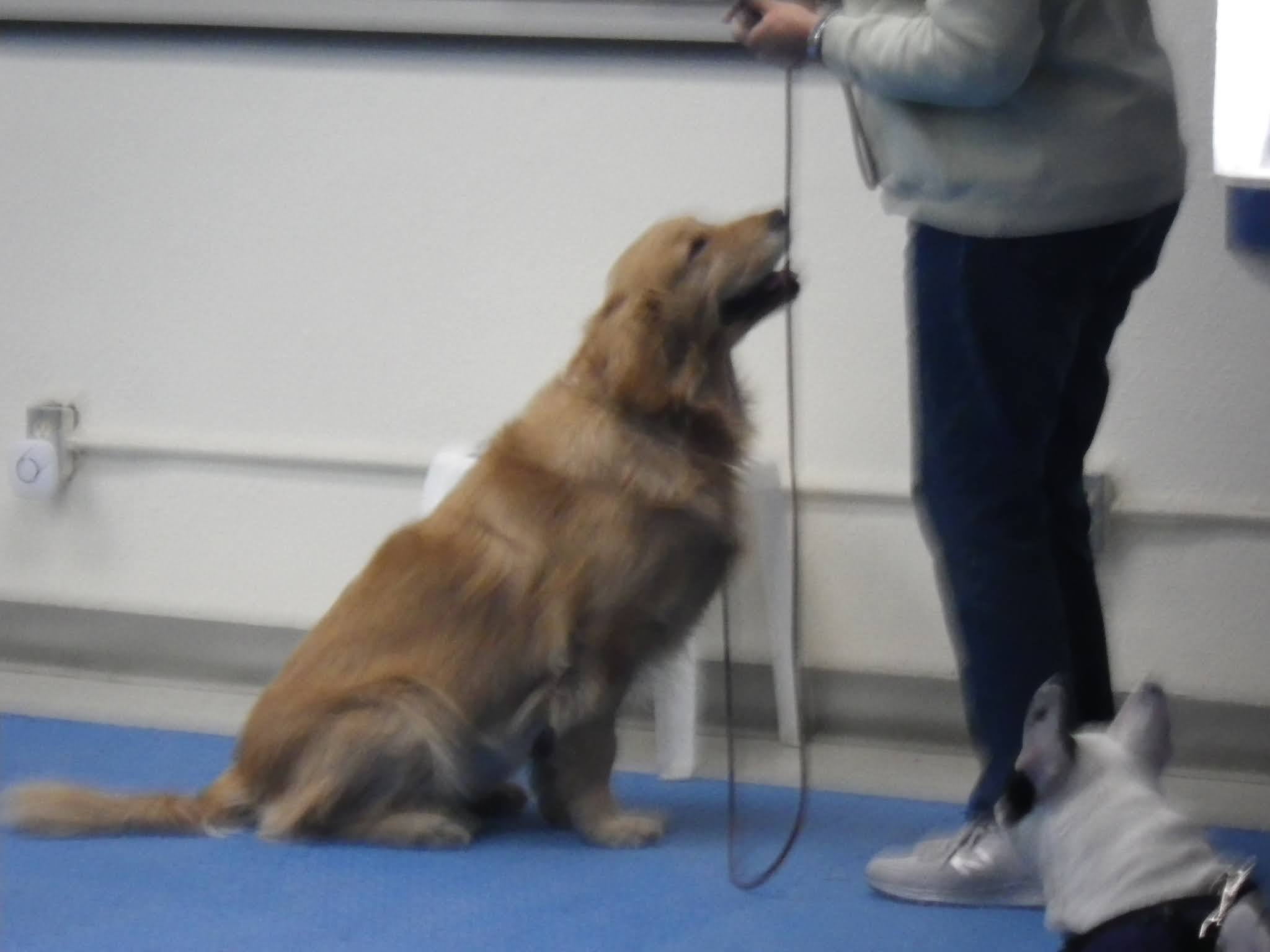
Raising A Service Puppy
hen you raise a puppy to be a service dog, you are ensuring that the puppy grows up prepared for the work that is necessary.
For years, puppies have been raised as service dogs for the blind. But today, puppies are raised to assist the deaf, injured military veterans, children with autism and people with disabilities of all kinds, according to the American Disabilities Act.
Raising a service dog requires you to spend time socializing and training the dog for the first 12 to 18 months of his life. The goal of this training is to raise a puppy who can bring a higher quality of life to his disabled owner.
Not all dogs have the temperament or disposition to be service animals. Make sure you always consult a qualified trainer/behavior consultant before accepting a puppy, or an older dog, for service dog training.
Meeting Puppy Needs
Any particular dog has many instinctive motivations to do what they do - finding food, finding mates, feeling safe during rest, not wasting energy on unproductive activities and interaction with others. He consciously or unconsciously controls his environment in order to provide for himself the necessities of survival. Living with humans is an artificial environment and most of the necessities of survival are provided by the humans - usually in abundance.
Conservation of energy plays a huge part of what I train a potential service dogl. Most dogs, when confronted by a human that has food in their hand and keeps withholding it, will try jumping, lunging, biting, barking and many other strategies for getting that food - mostly assertive methods.
These are not very energy conscious types of activities. But these methods are what are hard wired into a puppy in order to get an adult to feed them by vomiting up whatever they ate that day. Eventually, the adult dogs teach the puppy to tend to his own necessities and those methods of "begging" are extinguished.
Not so in the human world. Humans tend to let a pup continue those activities and then complain about them when the pup is a 90 lb menace. Humans need to show their pups the same thing they would be learning from the adult dogs in their social group - how to provide for themselves with the least amount of energy expended. In our world that means learning manners about food, doors, cars, walks, guests, cats and other things found in the human existence. The pup needs to learn how to use its energy to control this environment in order to get its needs met.
Observing the Obvious
How do you teach somebody to see what is actually there? Too many people see only what their upbringing, experiences and prejudices allow them to see. And too many also see what there isn’t, made up to either make sense of what is there are because the person can't see something without fear and so doesn't see it consciously.
The art of actual observation is tremendously neglected in our society.
"The world is full of obvious things which nobody by any chance ever observes." - Sherlock Holmes
Observation of the world, your community, the weather and the environment were natural from childhood.
It's the only way you ever see anything; you observe the obvious.
I know a lot of people who have issues with the CBS show "The Mentalist." What happens on that show is someone who sees what is there, the minutia as well as the larger things. The character in this show, as he says over and over, isn't clairvoyant, he just notices things. Everything, in fact.
Most of us don't do that. With images and information constantly buzzing around us, we've conditioned ourselves to "grazing," to picking out only the bits that are most interesting and ignoring the rest.
Understanding Context
Dogs however see everything. Dogs are very contextual. It often surprises me that the word "generalization" came into being in the dog training world. It should be specialization since what is actually happening with training is that the dog learns that the environment is not part of any particular action (like sit). The dog learns that actions are separate from the environment instead of being a part of it.
But in seeing everything and including everything in the environment as part of any action or experience, dogs also have specific responses when something goes wrong. Just like learning a new behavior, having things go wrong include everything that was there at the moment of the trauma.
Learn this about your dog. They see and remember everything, especially during a traumatic experience. Learn to help a dog separate the trauma from the environment in much the same way you help a dog learn that sit means put the rear on the ground and doesn't include your favorite chair in the living room.
“Perfection is the lowest standard a human could ever take on because it is unattainable therefore you ultimately have no standard at all. You are preparing for failure, because that is your ultimate expectation.” - Anthony Robbins
Seeking Perfection
The desire to be perfect burdens many people and ironically dooms them to unhappiness. At first, we might think that trying to be prefect is desirable.
Perfection suggests a state of flawlessness, without any defects. Seeking perfection at a particular task might be achievable and certainly students can strive to attain a perfect grade or you can try to accomplish a perfect job at something. Yet, the goal of being perfect in everything is altogether a different story.
The closest thing to perfection is in the ability to be fully present. Without any distracting thoughts, measuring or grading ourselves, we're free to really be in the moment. It's in that moment that we're truly alive. Yet, the perfectionist isn't typically present as they're either busy critiquing the past and replaying their every decision or worrying about the future. So, you see the perfectionist is never really present. Isn't that ironic?
Dogs live in the present. There is no “worry” about the future other than that necessary for survival and since we provide that, not much worry is accomplished. There is no measuring of past actions by a dog, what’s past is done unless it may trigger the possibility of trauma, but it’s not examined. So in many ways, our dog are already more perfect than we are in their natural state.
What Is Perfection
Being present also means not worrying about what others think. Being present means not worrying about whether you are going to make a mistake, taking the pressure off so that mistakes have a much lesser chance of happening.
Our dogs make mistakes for similar reasons to why humans do:
- Lack of training - don't assume your dog is only being stubborn.
- Poor communication – the dog doesn't know what you want.
- Sudden Environmental Changes – the startle factor can really mess up a performance
- Emotional Pressure – That pressure, which in most cases causes the dog to want to move faster, creates mistakes – missed behaviors, sloppy behaviors and refused behaviors.
- Complexity – the dog has been asked to do something that has been poorly trained or not trained.
- 7 areas in your relationship with your dog that require patience and attention - not seeking perfection.
- Your dog’s and your own health and fitness
- The emotional relationship you have with your dog and how s/he reflects you
- Your perception of your relationship with your dog
- Time and focus
- Goals in life, working and sport with your dog
- The value of the exchange medium you have with your dog
- Celebrating success and contributing to your dog’s understanding of that success
Remember these and your journey with your service dog prospect will be filled with joy, not frustration due to unreal expectations.
6 vital areas of training a service puppy
Enrichment - Meeting the needs of the DOG and following the path of growth as close to naturally as possible.
Husbandry - Showing the puppy that being handled, poked, prodded, groomed and just cuddled is all fun.
Environment - Secure space, species appropriate food, water, space to grow, remove dangerous substances.
Socialization - Not just exposure to the world, but fun, trauma free, interaction. Learn to read stress in your puppy.
Impulse Control and Self-Control - Teach what mama dog would teach - patience, understanding, communication and boundaries, and you will have impulse control.
Engagement - Your pup needs to learn to engage with you before any other engagement and to focus on what you are teaching and eventually on the tasks that the puppy will be doing to help you.
Equipment Makes A Difference
There are a zillion pieces of equipment out there purportedly for training our dogs.
Service dogs, especially assistance dogs, require training for opening and shutting doors, turning lights on and off, and other various tasks.
Training these tasks takes equipment. But for basic obedience and most foundation training the equipment needed is only dependent on where you are training.
No tools are required to train any dog for anything. Activity required equipment is necessary, but you can train a naked dog easier then hanging all kinds of things from his body.
Once the dog knows what to do without any extraneous tools, putting a leash, collar, and harness on him is a piece of cake.
Consult Your Dog's Understanding
Self-control is much more important than the human control of "obedience". Jamie Robinson
Most methods of training are about controlling the dog; ensuring that the dog does what you ask, when you ask and how you ask him to do it.
Most of those methods also use some form of avoidance to achieve a level of control over the dog and have fanciful and complicated tools to create this control.
Those tools generally deliver to the dog pain or discomfort that must be avoided. The dog learns how to avoid what the tools deliver by doing the actions you "command".
Some "obedience" is necessary with a service dog, but most areas that service dogs are trained for need "intelligent disobedience".
Training with pain, intimidation, unnecessary force, compulsion or discomfort does not allow any disobedience at all. It also doesn't teach the dog what to do when you and your tools aren't around.
Intelligent disobedience is necessary with a service dog and the only way to train it is by consulting your dog's understanding of what is being taught.
I have a great picture of Micah being totally upset with me. He alerted on a low blood sugar, I said "thank you", and because I was outside with all the pups in training, did not have my meter on me.
He is trained to stop alerting when I test myself with the glucose meter. When he saw that I did not test, he tried to alert again (persistence). I said "enough" and he got upset.
This is intelligent disobedience at work. A dog trained with compulsion would have just accepted the initial "thank you" and gone away.
Games for your puppy that teach the six basics
A Game of Enrichment
A sensory garden appeals to a dog’s strongest sense: smell. Scientists estimate a dog’s nose to be tens of thousands of times more sensitive to odor than ours. If their eyes were as strong as their noses, what a human can see at a third of a mile, a dog could see more than 3,000 miles away. And the part of their brain that’s devoted to analyzing those smells is, 40 times greater than ours.
So get a dog sniffing, and you get his mind working.
It doesn't matter how big or small the space you have to "garden" in is. Big or small, your dog is entertained, mentally and physically challenged and allowed to indulge in the basic sense - smell.
Environmental enrichment basically means making an animal's space more interesting and more fulfilling of its needs.
Consider your dog’s personality when you create a sensory garden. Look at your pet as an individual, and decide what they need, If they’re really hyper, attracting birds for them to bark at isn’t the way to go.”
A Game Of Scent and Understanding
This is going to be a bit different from the normal scavenger hunt where you just hide your dog’s food or toys and have her find them. In this game you are going to be asking your dog to make a choice between items each time she finds a stash. Each stash should have food, toys and household objects that you don’t ever want her to interact with.
Create a stash of one treat, one toy and one object in the living room while your dog is either in a down stay in the kitchen or playing with another human in another room. Call your dog and tell her “find it”.
You must be ready to body block both the food and the object so that her only valid choice is the toy. This is a game of how motivating toys are for her, but she is not to choose the food or the household object.
Repeat this game in most rooms of the house. Each room should have one treat, one toy and a household object that is common for that room, such as a frying pan for the kitchen.
A series of games for focus and engagement, prediction and rhythm.
Beginning Find My Face
Wait for your dog to be in front of you, sit/stand/down, it doesn't matter and don’t ask for any specific behavior. Throw a cookie on the floor and then wait. Your dog will go for the treat and eventually look up at you to see if more is coming. Give your marker (click or say "yes") and throw another treat on the floor. Keep this up until you have a great rhythm going. Fifty repetitions of this should only take about 5 minutes once you have a rhythm going.
Advanced Find My Face
On the next throw, instead of throwing the treat straight down as in game 1, throw the treat about 5 feet to your left making sure that you have enough leash so the dog doesn't end up tugging on it to get to the treat. At the instant your dog makes the decision to turn back toward you, just like the whiplash turn, mark the behavior and throw the next treat 5 feet to your right. Again, get a great rhythm going on this so the dog is actually predicting where the next treat is going to be. Don't make it "interesting", it's a pattern with a rhythm. The dog cannot learn to predict his environment and understand that he can do so if you are constantly changing the game. Keep it simple and try to put the treats in the same place on each throw.
Expert Find My Face
Throw a treat our in front of you. As your dog goes to get it, turn around so your back is facing your dog. He must come around and find your face.
Some dogs have a problem with coming all the way around, so make your first turns half way instead of a full turn.
Continue this game for at least 50 repetitions.
A Game of Self Control and Calm - Do Nothing
There are instructions galore out there for teaching a dog to relax. Place, settle, relaxed downs. But it's all on cue; rarely does the dog make the actual association that the cue means the dog can actually relax. Cues have side effects.
I'm not saying that all methods of teaching a settle don't work, all I'm saying is that in order for the dog actually to be relaxed, it needs to be the dogs understanding and choice. If they truly can't relax, then it’s possible there are other reasons than a lack of training.
So instead of cueing our dogs with this exercise, we are going to do NOTHING. This game works best during times when you are sitting watching TV, on the computer, knitting, or reading a book. This won't stop your dog from getting up and following you to the loo, or investigating the refrigerator with you, but s/he will settle again once you do.
To start, put your dog on a leash, sit down and start doing something quiet as listed above. When your dog sits, reward on the floor, do not put the food in the dog's mouth. This will of course cause him to stand up to get the food. Rinse and repeat increasing the time between the sit and the treat EACH time. It may only be an increase of 2 seconds, but it must be increased each time.
Eventually, somewhere around 20 seconds between sit and treat, your dog will lay down. Two treats. At this point the dog shouldn't need to get up. The treats should be between the dog's paws so that s/he doesn't have to get up. S/he may get up anyway, so just keep waiting for the down.
When you get to 3 minutes, move to a different spot in the house. You can do the same activity, or you can change the activity.
Pet With Purpose - A Game of Handling and Grooming
There are ways to create and/or to strengthen the bond you have with your dog. One of the easiest ways is to just be there with your dog. No other agenda, no checking your friends status on Facebook or sitting in front of the TV.
A great thing you can do to deepen your bond with your dog is to pet him with purpose. Don't just pet your dog absentmindedly when you're staring at your computer, talking to a family member, or watching TV. Let your dog see that you really care about him by petting him while looking him in the eyes.
You can even call him toward you to begin the petting session. Using his name as you pet him reinforces your bond with your dog.
Petting has many forms. There is the quick scritch or pat on the head, the hard stroke down the head or the back, the absent-minded circles somewhere on the dog's body and the full-blown rub down. Each of these touches says something to your dog.
Start with long slow strokes from head to tail, from head down the legs and around the belly always starting from the head. Target specific areas by scratching behind the ears, cheeks, under the chin, bridge of the nose, chest (Asher's favorite spot), and between the eyes (Micah's favorite spot).
Gently rub only the skin, not the underlying muscle, in a circular motion with three fingers, going down the neck and around the shoulders; then keep the motion going from the buttocks down the thighs.
Give gentle lifts and squeezes down each leg starting at the top of the leg and finishing near the feet. Walk your thumb and forefinger down each side of the spine, with circular motions about the size of a quarter, to the base of the tail.
Lastly, to finish this off, put your hands on your dogs shoulders and lightly brush down to the elbows. Move down the spine so you're doing the brushing stroke from the spine around the chest and then the belly area finishing off with the hips and thighs.
A Game For the Environment - Name That
Start with an object your dog actually likes whose name is already familiar to your dog, such as a ball. Lay it in a clear area alongside two other objects, such as a hairdryer and hairbrush. Point to the first object and tell your dog to "Find the xxxx".
Mark and reward all successful attempts even if he goes to the known object last.
Repeat this until your dog is reliably going to the known object first.
Add another familiar object to the set, one whose name is familiar to your dog like his bowl. Alternate asking your dog to find each of the two familiar objects.
Mix up the positions of the objects between every trial and repeat until your dog is reliably finding the object named without needing to inspect the other objects.
Two Game For Socialization
Pass The Puppy
Divide your puppy’s meal of kibble into small plastic bags, one bag for each person visiting. Before starting the game, if necessary, explain to everyone how to properly hold the puppy by supporting her rear end. The first person then picks up the puppy and gives her a piece of kibble. The person touches one of her paws, gives her a piece of kibble.
Touches another paw, gives a piece of kibble. Touches her ears, gives a piece of kibble. Touches her tail, gives a piece of kibble. Looks at her teeth, gives a piece of kibble. Then the person passes the puppy on to the next person, who goes through the same routine.
Puppy Recalls
Divide your puppy’s meal of kibble into small plastic bags, one bag for each person visiting. Have everyone sit in a circle on the floor, with the puppy in the center of the circle. One person calls the puppy to come and holds out the piece of kibble. When the puppy goes to the person, she gets the kibble and lots of petting and praising. Then someone else in the circle repeats the routine. This game teaches your puppy that it’s rewarding to approach people in a calm manner.
Preparing For Your Puppy
Anything within reach is fair game for puppy’s teeth. To puppy proof your home:
- Pick up or secure trashcans, hampers, books, magazines and breakables.
- Put household cleaners, poisons, pesticides and medications behind secure cabinet doors or out of reach.
- Run electrical cords through conduit or attach them onto baseboards
- Rid the house and garden of toxic plants and poisons (see Chapter on Puppy’s health).
- Keep cigarettes and ashtrays out of reach.
- Dispose of bones and keep trash out of your puppy’s reach.
- Close bathroom doors or toilet lids especially when cleaners or deodorants are used in the toilet bowl.
- Keep screens or windows shut especially in upper story rooms.
- Keep holiday ornaments out of reach - shiny glass bulbs and tinsel are attractive and dangerous.
- Keep scented candles out of reach. They may smell and taste good, but can cause intestinal distress and make the puppy very sick.
Equipment Needed For a New Puppy
- Food and Water Dishes: We recommend stainless steel bowls. They are durable and can be thoroughly cleansed.
- Food: Service Dog pups require a quality puppy food. You can expect your puppy to eat 40 lbs or more of puppy food before switching to adult food.
- Leashes and Collars: A buckle collar to hang tags on is best as it will grow best with the pup. A leather leash will get you started.
Essential Equipment
Crates and Gates: We recommend a portable crate that will last the entire time you are raising puppies. It should fit your puppy as an adult dog. The typical size is 24-26” wide, 36-38”deep and 32-34” tall. You can purchase a plastic molded crate or a metal wire crate. The wire crate folds down and travels in less space, provides more ventilation and your puppy can see things going on around him. Plastic crates are lighter weight, provide more privacy and puppies are not likely to pull or push things through the side openings.
Each has its benefits and drawbacks, so choose the one that best fits your lifestyle. Your crate is an essential tool for safe puppy raising, and an important investment.
Baby gates help to keep your puppy safely confined and assist with house training. You may want to buy, make or borrow several.
Good Toys: There are many toys on the market today, so how do you decide which are safe and which could prove to be fatal? Toys that have a reputation for being sturdy are the Nylabone toys, however we do not recommend them as puppies have a tendency to chew off pieces and swallow them.
There are some of the Nylabone toys that are not as dangerous. The Kong toys or the similar Pet Planet or Goodie Ship have a long life but must be watched for wear and tear.
ALL TOYS SHOULD BE CHECKED FOR RIPS OR TEARS ON A REGULAR BASIS. THROW AWAY TOYS AS SOON AS THEY BECOME WORN TO THE POINT THAT THEY ARE UNSAFE.
Bringing Your Puppy Home
Try to prevent inappropriate behavior, or redirect your puppy with a toy or food and show him better things to do – it is much easier than trying to correct problem behavior once it has become a bad habit. - Jamie Robinson
Allow plenty of time to let your puppy bond a bit with you before heading home.
On your way home, have a safe place for the puppy to travel. A small crate is necessary unless you have passengers to hold him.
When you arrive home, take the puppy to his designated “potty” area. Give the cue for him to potty. Once he does his business, give immediate praise, letting your puppy know he has done well.
You are now ready to take the puppy into his home and slowly introduce him to his new surroundings.
Limit your puppy to just a room or two at first. Allowing your puppy too much freedom in the house greatly increases the probability of “accidents”.
Introduce your puppy to all the things in “his” room. When he finds something inappropriate (he will!), distract him by calling his name, and then reward him with food, a toy or a quick game.
Your new puppy will investigate everything, and his attention span is very short. Temporarily put up or remove anything that could be dangerous to him.
A puppy is learning, he doesn’t yet know the rules. Teach him. It’s easier on you and him if you concentrate on what you DO want and not the zillion things you DON’T want.
Punishment and corrections are only good for a moment. Reinforcement and rewards are good for life.
Slowly introduce your puppy to each room in the house over the next few days or weeks.
Remember to distract/redirect him from inappropriate activity and praise him for good behavior. Never leave him loose and unattended for at least the first month or two.
Flea and Tick Prevention
Fleas are parasitic insects, which live on blood from your pet. When it comes to fleas, an ounce of prevention is worth many pounds of cure. We recommend that you use a topical flea spray, powder or dip during warm months. Apply the repellent to your puppy each time you take him away from home, or as often as directed by the product label.
Monthly topical ointments, such as BioSpot, Advantage, Frontline or Revolution can be used once puppies are old enough, based on the product label. Read the labels for these types of products very carefully.
Should you ever find fleas on your pets or in your home, you will need to go through a complete flea removal regimen. Remove and wash or throw out all pet bedding. Thoroughly vacuum your house, paying special attention to dark out-of-the-way areas and along walls, where fleas prefer to lay their eggs. Throw the vacuum bag away. Use a premise spray or bomb, paying special attention to those dark corners. Your outdoor puppy play area should be sprayed or bombed.
Thoroughly clean and spray any area your pets frequent. Don’t forget your car. Use a topical ointment on your puppy and any other family cats or dogs. All these things must be done at the same time, and the premise spray must be repeated again in two weeks to kill any eggs that may not have been affected by the original treatment. It is a good idea to have a stool sample tested soon after fleas are diagnosed since fleas are common carriers of tapeworms. A complete flea treatment can cost $100.00 or more. Need we say more about the value of prevention?
Vaccinations
Your puppy most likely received his first set of immunizations shortly after weaning to help prevent some common viral and bacterial diseases. The vaccines usually include components for distemper, hepatitis, leptospirosis, kennel cough (parainfluenza, adenovirus, Bordetella), parvovirus, canine corona virus and rabies.
These vaccines must be repeated at specific intervals for maximum immunity.
Intestinal Parasites
Intestinal parasites can cause serious illness if left untreated.
Common intestinal parasites found in dogs include roundworms, tapeworms, whipworms, and hookworms.
Protozoa infestations can include giardia, coccidia and toxoplasmosis.
Your puppy was treated for worms and had a fecal test just before you took him home.
Take a stool sample with you when your puppy sees the vet for vaccinations and heartworm tests. If caught early, intestinal parasites are easily treated and will do no lasting damage.
In most cases, Ivermectin will kill all internal parasites. But always consult your veterinarian before giving your puppy anything.
A New Look At Socialization
Positive socialization experiences are so important if you want your little one to enjoy a lifetime of confident, friendly communication with the world around him.
Socialization means learning to be part of society. When we talk about socializing puppies, it means helping them learn to be comfortable as possible within human society-a society that includes many different types of people, environments, buildings, sights, noises, smells, animals and other dogs.
True learning first starts in an environment that both members of the human/dog team can concentrate – at home! With Savvy online videos, you can train your dog or pup away from over-stimulating or terrifying environments, setting it up so both you and your dog can succeed.
You want your puppy to see the world as a friendly place, and the people and animals he shares it with as his friends. To make sure this happens, it's important to introduce him to as many new and different people, sights, sounds, smells and situations as possible... and as early as is safe and practical.
Puppy socialization helps build confident, friendly puppies who mature into well-behaved, calm and sociable dogs.
An important part of puppy socialization is getting your pup to feel comfortable in strange or unfamiliar surroundings. Make sure that each of the socialization events are pleasant and non-threatening, but still interactive. Just being exposed is not socialization.
Most vets will tell you not to take your puppy out until fully vaccinated. The American Veterinary Medical Association says to get socialization started after the first shots. You can read their statement here: https://www.avma.org/javma-news/2008-10-01/behavior-society-supports-early-puppy-socialization
Your Responsibilities In Public
Stores and other businesses that grant access to service puppies are truly invaluable partners to you, as we invest a year of our lives in raising each pup.
Business owners and citizens will want to know why you have a puppy with you, and as you explain the puppy-raising program, you and your puppy will be ambassadors for service dogs everywhere. We are counting on you to be courteous and responsible with your puppy in public.
Always bring clean up equipment. Even if it’s just a short trip or your puppy just did his business, accidents happen when you least expect them. Always have plastic bags, paper towels and a cleaning solution with you.
Responsible puppy raisers are welcome to return, while irresponsibility ruins it for others and leaves a poor impression of all service dogs.
Remember to ask permission before arriving. Service Dog puppies DO NOT have automatic access rights. Asking for permission ahead of time allows business owners to consider the request without pressure.
Consider providing the business with a copy of the Americans With Disabilities Act rulings on service dogs and also your state laws on public access.
Remember that your puppy is still a puppy. Select age appropriate outings and activities, and don’t expect very young puppies to be perfect. If you are having a difficult time with your puppy in a store, be considerate of others, and leave. Come back another day when things are going better.
Be friendly and answer questions. Many people will want to know about your puppy, and working dogs. Some will just want to tell you about their own dog. If you must ask them not to pet your puppy, do so in a positive way. Let them know about the important job your puppy is being raised for.
Copyright 2021 Jamie Robinson. All Rights Reserved